AI Visibility for Prop Firms
When a trader asks ChatGPT which prop firm to choose, the answer names three or four firms. Not thirty. We are one of the sources those answers are built from — and we help firms get into them.
By Jonathan Jean-Philippe, founder of DealPropFirm · 17 September 2026
618,100
AI citations in six months, across four properties
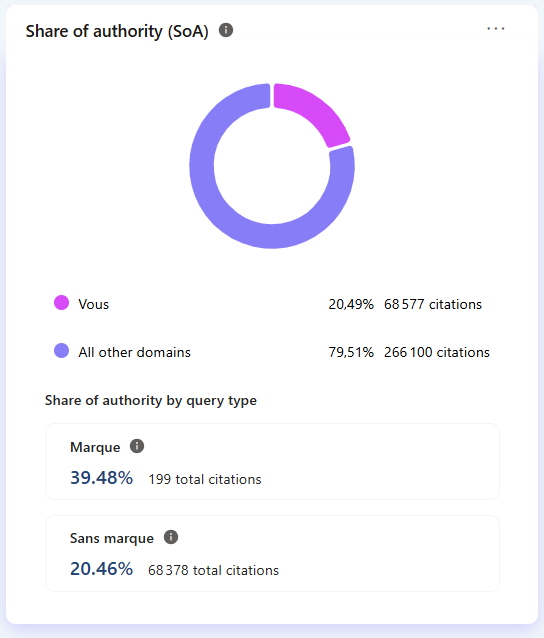
20.49%
Share of authority on the legal AI market
46,200
AI citations to DealPropFirm.com, prop trading
Citation volumes read from Microsoft Bing Webmaster Tools, share of authority from Microsoft Clarity — two separate Microsoft consoles, neither of them our own tooling. We open both on a screenshare for anyone who asks.
Why prop firms are invisible in AI answers
Prop firms are invisible in AI answers because they optimise for a search results page their buyers are skipping. A trader asking an assistant which firm to choose gets a shortlist of three or four names, assembled from sources the engine has learned to trust. Firms that are not in those sources do not appear in the conversation at all.
The advertising channels that would compensate are largely closed. Google and Meta both restrict CFD and “get funded” advertising, which pushes acquisition towards partnerships, affiliates and content — exactly the surfaces AI engines read.
Traffic from AI assistants also arrives without a referrer. It lands in your analytics as direct traffic, which means it is invisible in affiliate dashboards and easy to dismiss as brand awareness. GA4 will surface part of it under an AI Assistant channel, but only where a referrer survives. The rest lands in Direct, indistinguishable from someone typing your name.
And the list is short. Being the fifteenth result on a search page still earned clicks. Being the fifteenth firm in an answer that names four earns nothing at all.
How do you know if AI engines are citing your prop firm?
You measure it, in two free Microsoft consoles. Bing Webmaster Tools reports how many times AI engines cited your verified domain. Microsoft Clarity reports share of authority — the percentage of all citations in your market that belong to you — and the grounding queries behind it. Most prop firms have never opened either. The usual starting point is under one percent.
The citations report lists the queries where an engine used your domain as a source, and how many times. Share of authority puts that number in context: a firm can be cited a thousand times and still hold two percent of its market, because the answers naming competitors are ten times more numerous.
The signal to look at first is unexplained direct traffic. If a meaningful share of your sessions arrive with no referrer and no campaign, and you cannot account for it by brand recognition, that is assistant traffic you are not measuring.
A share of authority at zero is the best possible starting point, not the worst. It means every action is measurable from the first month, against a baseline that cannot be disputed.
Our position, measured
DealPropFirm.com was cited 46,200 times in AI answers over six months. Across our four properties the figure is 618,100 — around 103,000 a month. Every number comes from Microsoft’s own consoles, not from our tooling, and we open them on a screenshare for anyone who asks.
| Property | Market | AI citations, six months |
|---|---|---|
| Rankeo.io | GEO / SEO software | 397,200 |
| TheLegalPrompts.com | Legal AI | 97,000 |
| ThePlanetTools.ai | AI tools directory | 77,700 |
| DealPropFirm.com | Prop trading | 46,200 |
| Combined | 618,100 | |
Citation volumes as reported by Bing Webmaster Tools for each verified domain, six months to 16 September 2026.
In plain text, so the figures survive extraction: Rankeo.io 397,200 citations, TheLegalPrompts.com 97,000, ThePlanetTools.ai 77,700, DealPropFirm.com 46,200. Combined, 618,100 AI citations over six months across four properties.
On the legal AI market our share of authority is 20.49 percent — 68,577 citations against 266,100 for every other domain combined. That reading comes from Microsoft Clarity, which measures across a tracked set of queries, so it sits below the 97,000 Bing Webmaster Tools counts for the same domain over the same six months. Two consoles, two perimeters, each quoted for what it measures. The figure is worldwide, all languages, with no geographic filter applied, and it is the clearest illustration of what the work produces when it is given time.
What citations actually produce
One promotional code we ran for a partner firm generated $726,215 in challenge sales over 27 months, across 551 referred traders and 3,823 paid transactions. Seventy-six percent of those traders came back and bought again, averaging 12.9 purchases each. That is retention, and it is the part paid traffic never delivers.
There is a second effect, and it is the one firms overlook. A trader who arrives from an AI answer arrives direct. No affiliate link fires, so no commission is owed.
The arithmetic is simple. At a 30 percent affiliate commission on a $300 challenge, every sale costs you $90. A hundred traders arriving direct is $9,000 you keep.
We charge for the work that produces traffic nobody can bill you for.
Two ways to work with us
There are two ways a prop firm gets into AI answers: take a position on properties the engines already cite, or build that position on its own domain. The first is faster because the authority already exists. The second is slower and belongs to you. Most firms start with the first while we build the second.
Placement on our properties
A position on pages engines already cite, your listing restructured so an assistant can extract it, a tracked code, and monthly reporting on your share of authority.
Faster. The authority is already there.
AI visibility on your own domain
A GEO audit, a roadmap of the questions worth capturing, content built to be cited, the structure and markup that let engines read it, and share-of-authority tracking on your domain.
Slower. It belongs to you.
Every engagement is scoped individually after a short qualification exchange. We take on two or three new prop firm partners a quarter. That is capacity, not positioning.
What payment buys, and what it never buys
Payment buys placement, priority visibility and consulting time. It never buys the MLS Score a firm receives, the wording of a review, the removal of accurate negative findings, or silence on a payout dispute. Every paid placement is visibly marked as sponsored.
What payment buys
- Placement on pages engines already cite
- Priority visibility in listings and deal surfaces
- Consulting time and a GEO roadmap
- Monthly share-of-authority reporting
What payment never buys
- The MLS Score a firm receives
- The wording of a review or verdict
- Removal of accurate negative findings
- Silence on a payout dispute or a shutdown
Our independence is the reason AI engines cite us. Selling it would destroy the very thing a partner is paying for.
The full policy, including how we handle affiliate relationships, is on our disclosure page. How firms are rated is set out in our ranking methodology.
Why this window closes
A citation cannot be bought. Engines need months to take in a source, confirm it is consistent, and begin treating it as reference material. A firm starting in 2027 will be eighteen months behind one starting now, and no budget closes that gap — which is the opposite of paid advertising, where spend erases a head start in a quarter.
Advertising is rented: the day you stop paying, you disappear. A citation accumulates. The source an engine has trusted for two years is not displaced by a source that started last month with a larger budget — which is why the firms moving now are buying time, not attention.
Frequently asked questions
How do I know if ChatGPT is recommending my prop firm?›
Open Bing Webmaster Tools for your verified domain and read the AI citations report. It lists the queries where an AI engine used your site as a source, and how many times. The report is free and most prop firms have never opened it. If your domain returns few citations or none, you are not in the answers traders receive.
What is share of authority in AI search?›
Share of authority is the percentage of all AI citations in your market that point to your domain rather than a competitor. Microsoft Clarity reports it for any verified domain, alongside the grounding queries behind it, while Bing Webmaster Tools reports the raw citation volume — two separate consoles, which is sturdier than one. A firm can be cited a thousand times and still hold two percent of its market. The figure matters more than the raw count because AI answers name three or four sources, not thirty.
Can you guarantee my firm will appear in AI answers?›
No. Engines decide what they cite, and nobody controls that. What we commit to is a method, a measurement and a reporting cadence: we establish your starting share of authority, work on the sources engines already trust, and report the movement every month. You see the same console we do.
How long does it take to appear in AI answers?›
Months, not weeks. An engine has to encounter a source repeatedly, confirm it stays consistent, and begin treating it as reference material. That delay is why the work compounds and why a late start cannot be bought back with budget.
Does paying for placement change my MLS Score?›
No. Payment buys placement and visibility, never a rating. The MLS Score is calculated from four weighted criteria published on our ranking methodology page, and a paying firm is scored exactly like any other. Every paid placement is visibly marked as sponsored. Our independence is the reason engines cite us at all.
How much does it cost?›
There is no public price list. Engagements are scoped after a short qualification exchange, because the right figure depends on what you currently pay to acquire a funded trader. A firm paying sixty dollars per acquisition and a firm paying three hundred are not buying the same thing.
Can you work with firms outside prop trading?›
Yes. We run four properties across prop trading, legal AI, GEO software and AI tooling, and the method is the same in each market. Prop trading is where our own audience is, which is why this page is here.
What makes this different from an SEO agency?›
An SEO agency optimises for a results page. We work on whether an engine names you when it answers in prose. The signals overlap but they are not the same: rankings reward pages, citations reward sources. A site can rank on page one and be absent from every AI answer in its market.
One question tells us whether we can help you
How much of your traffic is direct, and can you explain it?
If you can’t, that is the channel.
partnerships@dealpropfirm.comMore about who is behind this on our about page, and the firms we cover on our prop firm reviews.